Personally I do not think that the education system should be showing students to be dependent on authority. Teaching them discipline and being obedient to their teachers is very important, but the students should be taught how to make the right decisions on their own and how to learn independently. This also effectively teaches them to be leaders which is certainly beneficial for their futures and in any jobs they will get.Sunday, April 19, 2015
Ira Shor's "Empowering Education"
Personally I do not think that the education system should be showing students to be dependent on authority. Teaching them discipline and being obedient to their teachers is very important, but the students should be taught how to make the right decisions on their own and how to learn independently. This also effectively teaches them to be leaders which is certainly beneficial for their futures and in any jobs they will get.Sunday, April 12, 2015
Christopher Kliewer's "Citizenship in school: Reconceptualizing Down Syndrom"
"In Dewey's tradition, Douglas Biklen (1985, 1992, 1993) has also described schools as potential locations of community connectedness. He and fellow educators have substantiated this vision with detailed accounts of actual educational arenas where all students are welcomed, no voice is silenced, and children come to realize their own self-worth through the unconditional acceptance of one another." (pg. 74).
In this chapter, Christopher goes into great detail about a certain student with Down Syndrome's experience at Shoshone school which is run by parents and they do not have tracking, as discussed in Oakes's piece. The student's name is Isaac and all of the other kids like him and seem to learn things from him even though it is really hard to understand what he is saying. I think that kind of environment would help Isaac learn a lot more than being in special education classrooms where he is forced to learn certain things and is cut off from more capable students. It will also help the other children know how to accept those that are different from them and teach those around them as they grow up not to discriminate against special needs kids.
"children are not mere receptacles of knowledge transmitted to them by teachers, nor do they go through biologically determined sets of stages that must emerge in linear fashion prior to acquisition of increasingly complex understanding." (pg. 82).
I completely agree with Kliewer's point that it does not make sense to call any one person "intellectually defective" when every child's mind is different and it is completely normal for there to be all sorts of levels of learning. Who are we to determine that special needs kids are at the very bottom intellectually? I really enjoyed this video and I wanted to share the message it is trying to get across.
" I don't tend to see Down Syndrome as something. If you look at those three kids running around the room, they're incredibly different from each other. They're different in terms of what their bodies are like, how they best communicate, what they're like socially, their interests. And with those three kids in the room it would be hard to say, 'This is how you should teach kids with Down Syndrome.' They are not all alike." (pg. 85-86).
My cousin actually has Down Syndrome so I have felt a big connection to this chapter of Kliewer's book. I never really looked at my cousin and see her as a girl with Down Syndrome, I look at her as someone who is just learning things at her own pace. When those teaching her use patience she starts to get better with reading, writing and speaking. Although it has been a slow improvement I can still see it and that should be all that matters. She is still a great person who teaches me things all the time so I wish that more classrooms could be mixed up with all types of children like in the woman Shayne's class. I believe that it could allow students to learn even more than they would being split up from children with special needs.
In this chapter, Christopher goes into great detail about a certain student with Down Syndrome's experience at Shoshone school which is run by parents and they do not have tracking, as discussed in Oakes's piece. The student's name is Isaac and all of the other kids like him and seem to learn things from him even though it is really hard to understand what he is saying. I think that kind of environment would help Isaac learn a lot more than being in special education classrooms where he is forced to learn certain things and is cut off from more capable students. It will also help the other children know how to accept those that are different from them and teach those around them as they grow up not to discriminate against special needs kids.
"children are not mere receptacles of knowledge transmitted to them by teachers, nor do they go through biologically determined sets of stages that must emerge in linear fashion prior to acquisition of increasingly complex understanding." (pg. 82).
I completely agree with Kliewer's point that it does not make sense to call any one person "intellectually defective" when every child's mind is different and it is completely normal for there to be all sorts of levels of learning. Who are we to determine that special needs kids are at the very bottom intellectually? I really enjoyed this video and I wanted to share the message it is trying to get across.
" I don't tend to see Down Syndrome as something. If you look at those three kids running around the room, they're incredibly different from each other. They're different in terms of what their bodies are like, how they best communicate, what they're like socially, their interests. And with those three kids in the room it would be hard to say, 'This is how you should teach kids with Down Syndrome.' They are not all alike." (pg. 85-86).
Monday, April 6, 2015
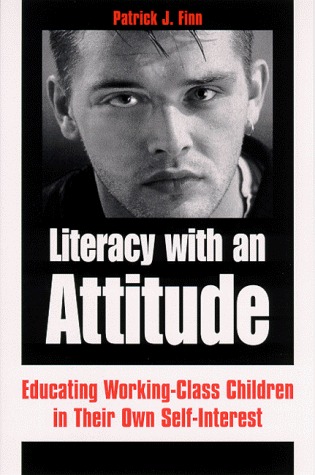
Finn's "Literacy with an Attitude"
I connect this with Delpit and when she talked about how knowing the rules and codes of power helps you attain power. Finn was basically told the code of power when he was told that his class showed parents what could be done with their students, the assistant principal was telling him that keeping the kids quiet and giving them busy work all the time was the right thing to do. So, this helped him acquire power because he was then feared by his students and was one of the assistant principles favorite classrooms to see. This is what taught him to be a better teacher and made him want to show other teachers the right way to communicate with students, to get them to really learn and listen to you, and to set up the right literacy and language in the class.
In chapter two there was a study done on five public elementary schools and they basically varied from the richest to the poorest schools. This reminded me of Ullucci because it was showing how the kids in the poorest school were not challenged at all and treated like they were incapable of many things but actually had decent IQ's. It also told us where the teachers lived and in the richest schools they lived pretty far away which meant that they were paid well to teach at that school, which meant that usually they would give better education.
Another connection I can make that may seem random is to Tim wise, because although comparing those schools helped us learn a lot about how we should teach all students the same even if they live in poverty and have a tough home life, the fact that these schools were nearly all white was only slightly brought up. It is understandable that it was not talked about in depth because segregation or racism was not a factor for this book, but the fact that there are still so many schools segregated in this way shows that this country is not done making progress with integrating schools.
Thursday, April 2, 2015
An update on my Pecha Kucha
I have not quite finished my chart yet but I do know that I will be mainly focusing on Collier's piece, called "Teaching Multilingual Children", in my Pecha Kucha. Here is what I have gotten so far for the chart, and the only reason why I have not gotten it completely done is because I am still figuring out what other articles I can connect to Collier's piece.
Delpit is one that I want to connect to it, because a lot of what she said is opposite from Collier's point of view, and I would like to show how what she thinks also connects to my Service Learning Project while some of what she said is the opposite of some things I have seen. I know that no one knows what my experiences have been in my Service learning project, but in your own opinions which other articles make interesting connections to Collier's "Teaching Multilingual Children"?
Right now I am leaning towards Rodriguez's "Aria", but I do not know if it is okay that I would like to talk about how my Service Learning experience is quite different from what I learned from Rodriguez's piece. I would like to talk about how my classroom shows teachers improving on teaching children a second language.
Besides that speed bump, I will be doing my presentation alone and I am feeling quite nervous about it. I am hoping by our next class time I will finally have all of my questions figured out and be on the right path to work on my Pecha Kucha. Either way I have my index cards ready to go I will just need to really get started this weekend and next week.
Delpit is one that I want to connect to it, because a lot of what she said is opposite from Collier's point of view, and I would like to show how what she thinks also connects to my Service Learning Project while some of what she said is the opposite of some things I have seen. I know that no one knows what my experiences have been in my Service learning project, but in your own opinions which other articles make interesting connections to Collier's "Teaching Multilingual Children"?
Right now I am leaning towards Rodriguez's "Aria", but I do not know if it is okay that I would like to talk about how my Service Learning experience is quite different from what I learned from Rodriguez's piece. I would like to talk about how my classroom shows teachers improving on teaching children a second language.
Besides that speed bump, I will be doing my presentation alone and I am feeling quite nervous about it. I am hoping by our next class time I will finally have all of my questions figured out and be on the right path to work on my Pecha Kucha. Either way I have my index cards ready to go I will just need to really get started this weekend and next week.
Sunday, March 22, 2015
From the 1950's to the present; Brown vs. Board of Ed. to us Now Having a Black President
I would like to start my blog post with a quote I wrote down from the video called "Between Barack and a Hard Place" which the author named Tim Wise stated,
"The standard that I use, ultimately, if you want to know if a problem is still a problem it probably makes sense to talk to the ones who are the target of it, not the ones who don’t have to know because we are not………. I can be a good person, a decent person and remain oblivious and I think that is where white folks have been for a long time.”
This quote from Wise was one of the only points he brought up that I agreed with. I thought that he did not give enough credit to how much progress has been made towards racism and having equality in this country throughout the many years, but when he said this quote I realized that maybe he is noticing things that I don't. Since he is an author who writes about these issues and wrote a book where he incorporated having our first black President into them, I figured he probably has gotten to speak to those who are targeted by discrimination and has much more insight than I do.
That may be a big reason why the first few times, such as in Briggs vs. Elliot, the courts did not sympathize and said that segregation was not unconstitutional. The court was made up of only white men back then, so like Tim Wise they could not understand what the colored people were going through back then because they were not the ones targeted. Not that I am justifying their decisions because I think segregation should have been gotten rid of the first time and during the first lawsuit.
"I just want to make sure that we don’t come to need black and brown folk to be like Obama"
I thought it was strange when he described colored people in the way of called them "black and brown folk". It is comments like that which aren't helping us get any closer to eliminating racism and discrimination because everyone is from a different culture, I thought we were past just calling people things by the color that their skin is. They were basically segregating all of us just by them separating people into different groups by the color of their skin just in their conversation. This video is also something that I found interesting because some schools still do seem a bit segregated today and it was nice to see people are still trying to keep changing things for the better.
"We are nowhere near a post-racial America.......
So, to pretend or to act as
though we are headed to this post-racial place would be no more logical than to
say Pakistan was headed to a post-sexist place"
I just thought this was a good quote, even though I think we are heading to a post-racial place. It may be a really slow process but we are getting there and I think we should all at least try to have faith in that because if we don't it may not work. When we all fight to make change that is when it actually happens. Like Tim Wise mentioned, that big events or when everyone got together to make a big change are what we actually still remember throughout history and what still makes a mark on everyone's lives.
Sunday, March 15, 2015
"In the Service of What?"
Service learning does not just have to be at an elementary school, middle school, or high school, it is meant for those to be tutored that need the help. I was sort of confused when Kahne and Westheimer gave their examples of service learning, which were helping out a center with babies that were carried while their mothers had done drugs during the pregnancy, giving homeless people survival kits, running errands for a busy doctor, etc. Don't get me wrong they all were great community service projects and they gave me good ideas for the future, but I thought in service learning projects, we the students are not supposed to be the only one going through a learning experience. In those examples, the students were definitely helping others and making their lives a bit easier, but did those that were helped by these students really learn as much as the students learned while helping someone in need? This is just something that I had to wonder since I am really hoping that the students I tutor will walk away having learned as much, or even more, from the experience of service learning as I have. But after reading this piece I realized that service learning is not a completely separate thing, it is a form of community service and volunteering.
Sunday, March 1, 2015
"Unlearning the Myths that Bind Us"
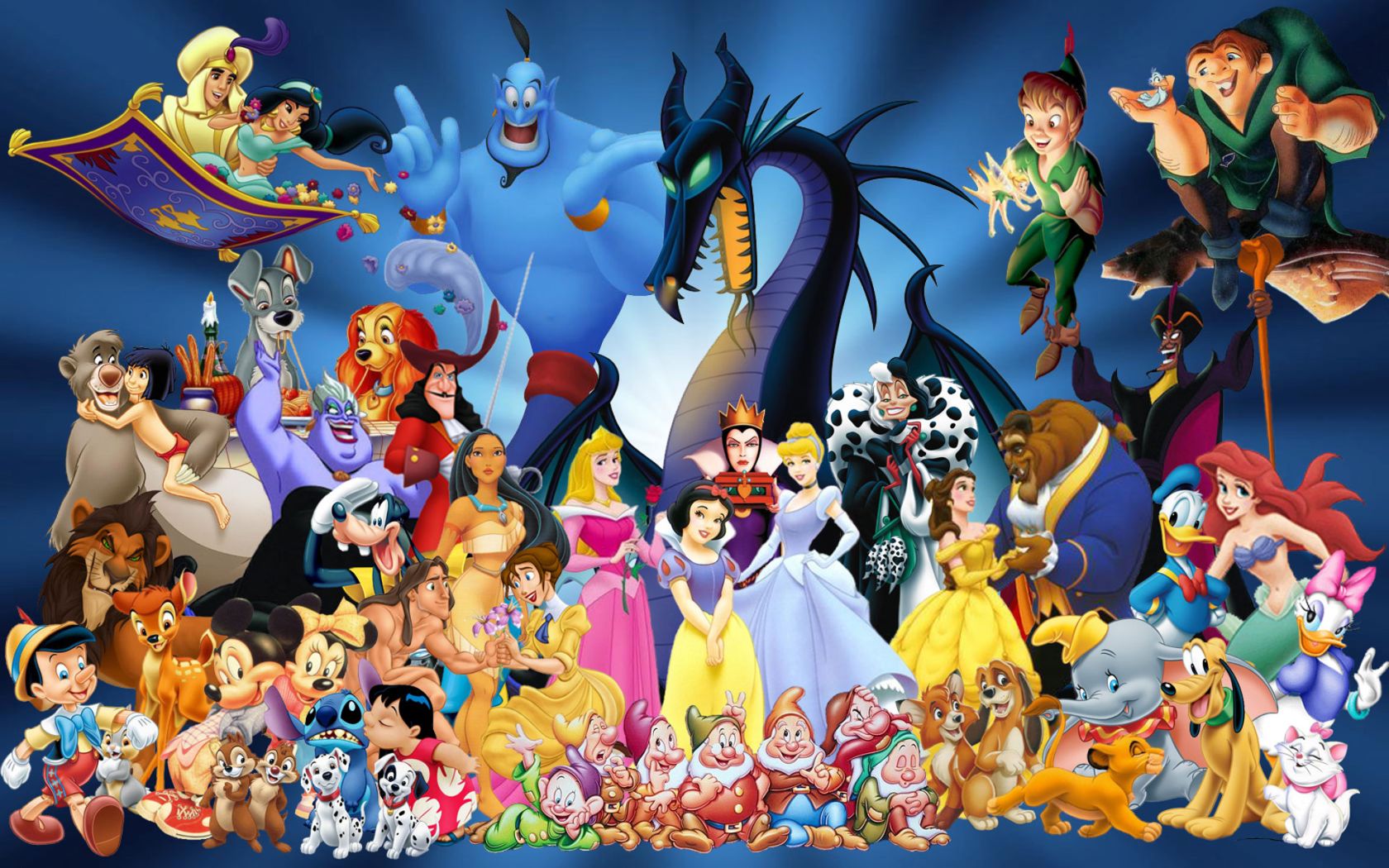
I was actually pretty excited to read this article called "Unlearning the Myths that Bind Us" by Linda Christensen because as we all grow older we hear more and more about the messages behind fairy tales that we had not noticed when we were younger. Any bad things that I have heard about them have just gone in one ear and out the other because up until now I have not wanted to have any perception of my childhood changed. It really doesn't help that I just do not like change in general. But now that Christensen is really analyzing the messages in cartoons and fairy tales, I want to learn about it and also be able see their roles in racism, sexism or stereotypes like some of what we have talked about in class so far. By choosing to focus on quotes from the text I am hoping to analyze certain parts of it more.
"If I want my students to wrestle with the social text of novels, news, or history books, they need the tools to critique media that encourage or legitimate social inequality."(pg. 127)
I really liked this quote, even though it is pretty early into the reading, because it is true that in order to understand where social inequality began you have to be able to analyze where it originally came from and how. Christensen believes that if you can not see the racial and social differences in fairy tales and cartoons then you definitely will not know how to pick apart any issues that we read in articles such as this each week. She is using the media as a foundation for better understanding of the world and how we have created stereotypes.
"It can be overwhelming and discouraging to find out my whole self image has been formed mostly by others or underneath my worries about what I look like are years (17 of them) of being exposed to TV images of girls and their set roles given to them by the TV and the media. It's painful to deal with." (pg. 129)
It is understandable that it is hard to find out the fairy tales you loved or shows you liked to watch as a kid helped to grow who we became as an adult. Especially when you are a woman who is pretty self conscious and may think a lot that you are not pretty enough or skinny to not be practically invisible in society. In my opinion it can also be comforting to find out that these things are not just all made up in your head and you aren't crazy, subconsciously you have been taught to feel this way by what you have probably seen on the television. It may be strange to think of it that way but that is partially how I looked at it while reading this text.
"I don't want students to believe that change can be bought at the mall, nor do I want them thinking that the pinnacle of a woman's life is an 'I do' that supposedly leads them to a 'happily ever after'." (pg. 133)
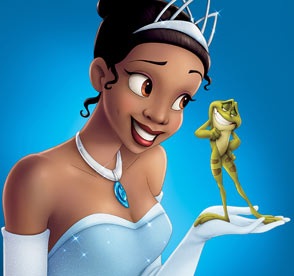
So I was happy when princess Tiana became the princess from the "Princess and the Frog" and then this article tells us part of the story called "Cindy Ellie, A Modern Fairy Tale" which is the story of an African Cinderella, which seemed like a good story so far. They definitely helped make fairy tales more racially integrated, but no matter what, getting the prince in these tales were the most important part of the stories. I wish that there could be more fairy tales made where this did not need to be an object of the story at all, but I doubt that there will ever be one without falling in love being an aspect. I personally like that part of fairy tales but I do get that finding a man is not the most important thing for a girl to do in her lifetime.
Also something to think about that could be something to talk about in class as well is how many guys feel about fairy tales which is in a small article right here
"If I want my students to wrestle with the social text of novels, news, or history books, they need the tools to critique media that encourage or legitimate social inequality."(pg. 127)
I really liked this quote, even though it is pretty early into the reading, because it is true that in order to understand where social inequality began you have to be able to analyze where it originally came from and how. Christensen believes that if you can not see the racial and social differences in fairy tales and cartoons then you definitely will not know how to pick apart any issues that we read in articles such as this each week. She is using the media as a foundation for better understanding of the world and how we have created stereotypes.
"It can be overwhelming and discouraging to find out my whole self image has been formed mostly by others or underneath my worries about what I look like are years (17 of them) of being exposed to TV images of girls and their set roles given to them by the TV and the media. It's painful to deal with." (pg. 129)
It is understandable that it is hard to find out the fairy tales you loved or shows you liked to watch as a kid helped to grow who we became as an adult. Especially when you are a woman who is pretty self conscious and may think a lot that you are not pretty enough or skinny to not be practically invisible in society. In my opinion it can also be comforting to find out that these things are not just all made up in your head and you aren't crazy, subconsciously you have been taught to feel this way by what you have probably seen on the television. It may be strange to think of it that way but that is partially how I looked at it while reading this text.
"I don't want students to believe that change can be bought at the mall, nor do I want them thinking that the pinnacle of a woman's life is an 'I do' that supposedly leads them to a 'happily ever after'." (pg. 133)
So I was happy when princess Tiana became the princess from the "Princess and the Frog" and then this article tells us part of the story called "Cindy Ellie, A Modern Fairy Tale" which is the story of an African Cinderella, which seemed like a good story so far. They definitely helped make fairy tales more racially integrated, but no matter what, getting the prince in these tales were the most important part of the stories. I wish that there could be more fairy tales made where this did not need to be an object of the story at all, but I doubt that there will ever be one without falling in love being an aspect. I personally like that part of fairy tales but I do get that finding a man is not the most important thing for a girl to do in her lifetime.
Also something to think about that could be something to talk about in class as well is how many guys feel about fairy tales which is in a small article right here
Subscribe to:
Posts (Atom)