Sunday, March 22, 2015

From the 1950's to the present; Brown vs. Board of Ed. to us Now Having a Black President


I would like to start my blog post with a quote I wrote down from the video called "Between Barack and a Hard Place" which the author named Tim Wise stated,

         "The standard that I use, ultimately, if you want to know if a problem is still a problem it probably makes sense to talk to the ones who are the target of it, not the ones who don’t have to know because we are not………. I can be a good person, a decent person and remain oblivious and I think that is where white folks have been for a long time.”

         This quote from Wise was one of the only points he brought up that I agreed with. I thought that he did not give enough credit to how much progress has been made towards racism and having equality in this country throughout the many years, but when he said this quote I realized that maybe he is noticing things that I don't. Since he is an author who writes about these issues and wrote a book where he incorporated having our first black President into them, I figured he probably has gotten to speak to those who are targeted by discrimination and has much more insight than I do. 
            That may be a big reason why the first few times, such as in Briggs vs. Elliot, the courts did not sympathize and said that segregation was not unconstitutional. The court was made up of only white men back then, so like Tim Wise they could not understand what the colored people were going through back then because they were not the ones targeted. Not that I am justifying their decisions because I think segregation should have been gotten rid of the first time and during the first lawsuit.


"I just want to make sure that we don’t come to need black and brown folk to be like Obama"

        I thought it was strange when he described colored people in the way of called them "black and brown folk". It is comments like that which aren't helping us get any closer to eliminating racism and discrimination because everyone is from a different culture, I thought we were past just calling people things by the color that their skin is.  They were basically segregating all of us just by them separating people into different groups by the color of their skin just in their conversation. This video is also something that I found interesting because some schools still do seem a bit segregated today and it was nice to see people are still trying to keep changing things for the better.

 
"We are nowhere near a post-racial America....... So, to pretend or to act as though we are headed to this post-racial place would be no more logical than to say Pakistan was headed to a post-sexist place"

         I just thought this was a good quote, even though I think we are heading to a post-racial place. It may be a really slow process but we are getting there and I think we should all at least try to have faith in that because if we don't it may not work. When we all fight to make change that is when it actually happens. Like Tim Wise mentioned, that big events or when everyone got together to make a big change are what we actually still remember throughout history and what still makes a mark on everyone's lives.

Sunday, March 15, 2015

"In the Service of What?"

            When I realized that I would next be reading an article about service learning I knew that it would be best for me to do a reflection blog since our class is doing it. Reading "In the Service of What? The Politics of Service Learning" by Joseph Kahne and Joel Westheimer, has helped me remember how important our Service Learning Project is, not only because I am learning more about teaching but because I can help many kids learn when they need it. I personally have had a difficult time in my service learning placement and needed the reminder of why I am doing it and why I was excited for it in the first place.
            Service learning does not just have to be at an elementary school, middle school, or high school, it is meant for those to be tutored that need the help. I was sort of confused when Kahne and Westheimer gave their examples of service learning, which were helping out a center with babies that were carried while their mothers had done drugs during the pregnancy, giving homeless people survival kits, running errands for a busy doctor, etc. Don't get me wrong they all were great community service projects and they gave me good ideas for the future, but I thought in service learning projects, we the students are not supposed to be the only one going through a learning experience. In those examples, the students were definitely helping others and making their lives a bit easier, but did those that were helped by these students really learn as much as the students learned while helping someone in need? This is just something that I had to wonder since I am really hoping that the students I tutor will walk away having learned as much, or even more, from the experience of service learning as I have. But after reading this piece I realized that service learning is not a completely separate thing, it is a form of community service and volunteering.

             In the second part of Kahne and Westhemer's article, they talk about how requiring community service in high school, or in our case college, really helps with moral development. In high school I barely completed my requirement and did not understand why or how I was supposed to do twenty hours of community service in my last two years of school. Now that I'm in a sorority I have put so much time into our philanthropies such as raising money for breast cancer, cleaning a whole homeless shelter's kitchen, participating in save the bay, relay for life, doing adopt a family at Christmas time by giving presents to children that would not have had any otherwise, etc. I think that all of those experiences have had a huge part in me being who I am today and they have only made me want to help more; to help those organizations again, to do more community service, and to start helping other organizations as well. 

Sunday, March 1, 2015

"Unlearning the Myths that Bind Us"

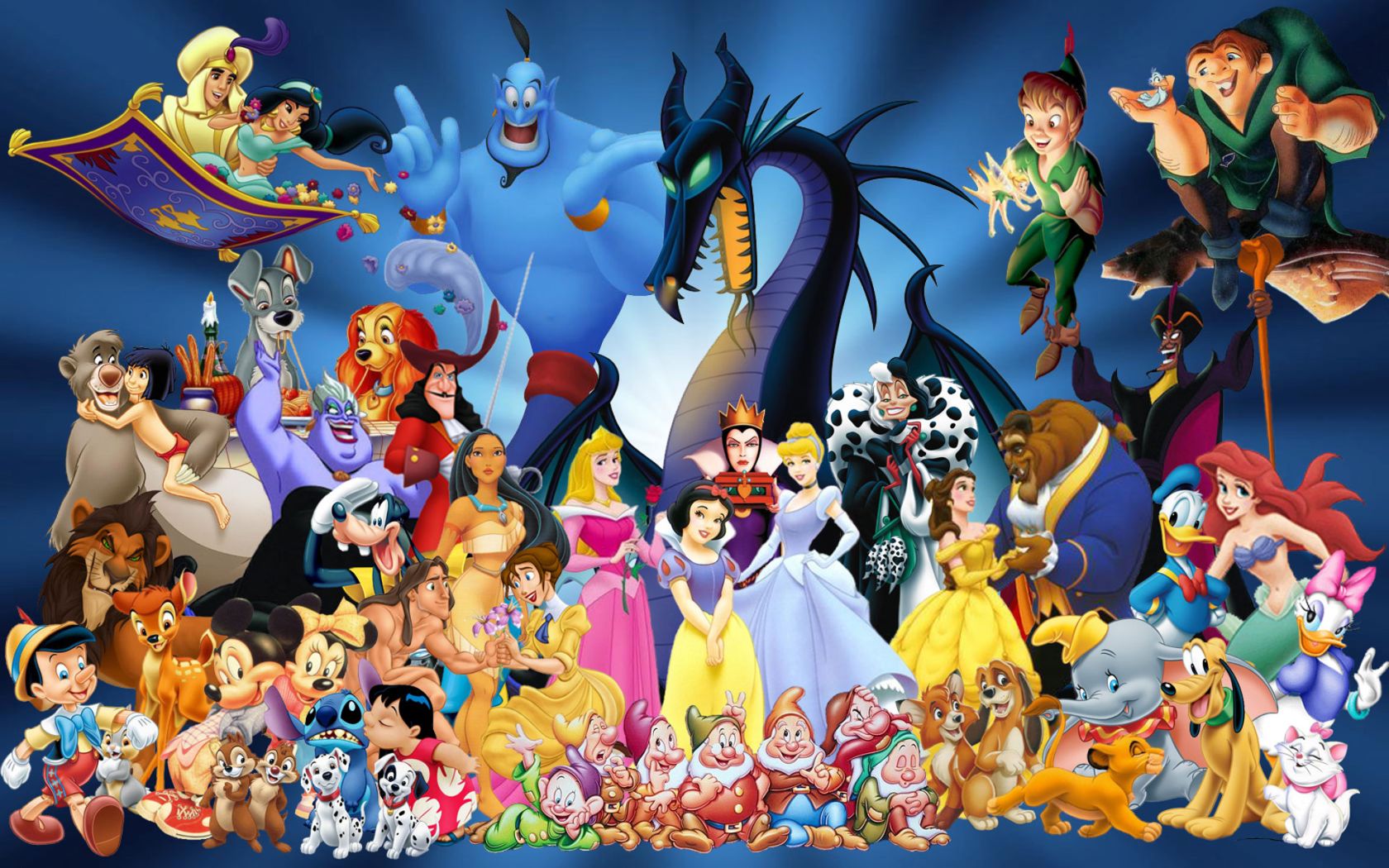
        I was actually pretty excited to read this article called "Unlearning the Myths that Bind Us" by Linda Christensen because as we all grow older we hear more and more about the messages behind fairy tales that we had not noticed when we were younger. Any bad things that I have heard about them have just gone in one ear and out the other because up until now I have not wanted to have any perception of my childhood changed. It really doesn't help that I just do not like change in general. But now that Christensen is really analyzing the messages in cartoons and fairy tales, I want to learn about it and also be able see their roles in racism, sexism or stereotypes like some of what we have talked about in class so far. By choosing to focus on quotes from the text I am hoping to analyze certain parts of it more.


             "If I want my students to wrestle with the social text of novels, news, or history books, they need the tools to critique media that encourage or legitimate social inequality."(pg. 127)
 
      I really liked this quote, even though it is pretty early into the reading, because it is true that in order to understand where social inequality began you have to be able to analyze where it originally came from and how. Christensen believes that if you can not see the racial and social differences in fairy tales and cartoons then you definitely will not know how to pick apart any issues that we read in articles such as this each week. She is using the media as a foundation for better understanding of the world and how we have created stereotypes.

             "It can be overwhelming and discouraging to find out my whole self image has been formed mostly by others or underneath my worries about what I look like are years (17 of them) of being exposed to TV images of girls and their set roles given to them by the TV and the media. It's painful to deal with." (pg. 129)
 
      It is understandable that it is hard to find out the fairy tales you loved or shows you liked to watch as a kid helped to grow who we became as an adult. Especially when you are a woman who is pretty self conscious and may think a lot that you are not pretty enough or skinny to not be practically invisible in society. In my opinion it can also be comforting to find out that these things are not just all made up in your head and you aren't crazy, subconsciously you have been taught to feel this way by what you have probably seen on the television. It may be strange to think of it that way but that is partially how I looked at it while reading this text.


         "I don't want students to believe that change can be bought at the mall, nor do I want them thinking that the pinnacle of a      woman's life is an 'I do' that supposedly leads them to a 'happily ever after'." (pg. 133)                 
 
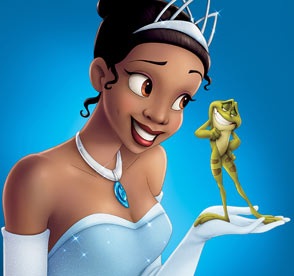
      So I was happy when princess Tiana became the princess from the "Princess and the Frog" and then this article tells us part of the story called "Cindy Ellie, A Modern Fairy Tale" which is the story of an African Cinderella, which seemed like a good story so far. They definitely helped make fairy tales more racially integrated, but no matter what, getting the prince in these tales were the most important part of the stories. I wish that there could be more fairy tales made where this did not need to be an object of the story at all, but I doubt that there will ever be one without falling in love being an aspect. I personally like that part of fairy tales but I do get that finding a man is not the most important thing for a girl to do in her lifetime.


Also something to think about that could be something to talk about in class as well is how many guys feel about fairy tales which is in a small article right here

Sunday, February 22, 2015

Reflecting on "Safe Spaces" by Vaccaro, August and Kennedy

         "Safe Space" is a book that was written by Annemarie Vaccaro, Gerri August, and Megan S. Kennedy where they bring up some really great points about issues in the lives of young lesbian, gay, bisexual, and transgendered people. This is another topic that I never think about enough therefore I never see how much of a problem it really is. In chapter 5 they discuss the importance of teaching children more about those with different sexual orientations in school so that the classroom can feel like a more comfortable and less judge-mental space for LGBT youth in the long run.
           I completely agree that your middle school and high school years can be some of the hardest years of your life, so adding the stress of being ridiculed for being gay can definitely feel like too much to bear. For one, I really do not think that starting teaching children about these issues as early as elementary school is a good idea. The way that the show called Postcards from Buster that Vaccaro, August, and Kennedy actually seemed like a good thing to show kids as a way to show them that there are families out there with two mom or two dads and they are just as happy and normal like any other family. I could not believe that people actually went out of their way to get that episode, which was called "Sugartime!", cancelled off of the show saying that children should not be shown these kinds of lifestyles. That is why I looked it up on Youtube and was glad to see most of it was leaked so that we could see it.
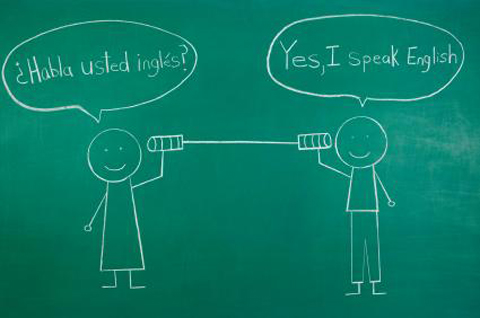
           A part of this chapter that I feel is important is where the authors talk about a girl that was in a Spanish class, and did not feel uncomfortable at all with being a lesbian in this class and enjoyed not only the class but her teacher as well. When this girl had wrote in Spanish that she had a sweetheart in the feminine form, since she had a female sweetheart, the teacher marked it wrong and changed it to the masculine form. I felt so bad for her and wished that she would have gone to the teacher and asked her to fix her grade because she really did mean to put the word in the feminine form and it should not be marked wrong since it is who she is. But I can understand why that would have been hard for her to go through with since LGBT youth can be so harshly judged.


My talking point for class would be to discuss why any teacher would compare homosexuality to bestiality and why a teacher's student being transgendered has to be a big deal.   


Sunday, February 15, 2015

"Aria" written by Richard Rodriguez

        Richard Rodriguez's approach in his article called "Aria" is quite different from any of the other articles we have read in  this class so far. Fist of all, I still can not figure out why he named it "Aria" and what the title's connection is with the article itself. Secondly, he writes it by giving us a story of his life that is meant to teach us about him becoming bilingual as a child and how it effected his life and how it effects most children in the world today. None of the other authors' pieces we had read gave their full story of why they were writing about that article; the author's background story seems to make the article more interesting for me.
         Richard begins by explaining that he started school as a child who really only knew Spanish, and at the school he went to the nuns did all they could to teach their students English. He and his siblings did not want to learn English because they felt that Spanish was a "private language" that made them different and made their family especially close at home because that is all they spoke to each other. So once the nuns went to their parents and encouraged them to teach English in the house and the kids had to take special tutoring things began to change. Their family life was strange now and Richard noticed that English basically became his primary language and he was barely ever speaking Spanish and it was as if his whole world was changed.

 
"Without question, it would have pleased me to hear my teachers address me in Spanish when I entered the classroom. I would have felt much less afraid. I would have trusted them and responded with ease. But I would have delayed---- for how long postponed?---- having to learn the language of public society." (page 1).

This quote seemed most important to me because it is the most true. If the nuns had coddled him and made him feel comfortable from the start and spoke Spanish, then there wouldn't have been a need to learn English and they would not have been nearly as motivated. People say that the only way to learn another language these days is to go to another country with no other devices and you will learn it from everyone speaking it around you and the other languages words written down all around you. It is the same way in school; with the nuns being around them speaking English all the time there was the need to learn it and to pick up on it.


"We remained a loving family, but one greatly changed. No longer so close; no longer bound tight by the pleasing and troubling knowledge of our public separateness." (page 2).

 Rodriguez's story was more emotional to read, but this part of it made me especially sad. The fact that the children were only speaking English and it made the family break apart and be not nearly as close was heart breaking. I wish that the kids could have become bilingual and more successful but also be able to keep that same bond with their parents that they always had. These are maybe some steps that could have helped the family, especially the parents, and could probably help keep a family close in the future with this same situation.

"So they do not realize that while one suffers a diminished sense of private individuality by becoming assimilated into public society, such assimilation makes possible the achievement of public individuality." (page 3).

Basically this quote means that even though Richard knew who he was and felt like his own different person by knowing a different language than most people knew, you can still be an individual and be unique while speaking English and having it become your primary language. Change is not always a bad thing, it can help you truly find yourself and teach you more than you had ever known before. This is why being bilingual is important, it opens so many more doors.  
 

Sunday, February 8, 2015

Focused on Certain Privilages

        "I think whites are carefully taught not to recognize white privilege, as males are taught not to recognize male privilege." (page 1).

                This is one of the first quotes that stood out to me while reading Peggy McIntosh's article named White Privilege: Unpacking the Invisible Knapsack. The title says white privilege because that is was McIntosh focuses on most, but in the beginning of the article and a little bit throughout it she talks about male privilege.When she had gotten to talking about men knowing that women need more privileges but were not willing to give up any of their own, she made the smart connecting to white privilege. It makes sense that whatever privileges we have had all of our lives do not seem like that to us, but McIntosh has paid attention to what aspects of life come easier for her than for some colored people.
             Although McIntosh first wanted to point out how men have more privileges than women, it must have made her think of how we as women are not all entirely unprivileged. It made her realize that the color of her skin has given her more advantages than some people of color which she had neglected to notice before.

        "I can do well in a challenging situation without being called a credit to my race." (page 3).

             To prove her point of white privilege, Peggy McIntosh wrote a list of 26 advantages that we as whites have in the world today. I chose advantage number 14 which was the one that stuck out to me the most because it was one of the most true in my opinion. One big example of this is how Obama became most famous for being the first black president not so much for being the next president of the United States. But all of the presidents before him were just well known for being great presidents or something they had done wrong; never anything to do with their race.

           If you have the time to read something really interesting, Gina Crosley-Corcoran wrote an essay named "Explaining White Privilege to a Broke Person" and she talks about White Privilege: Unpacking the Invisible Knapsack in complete detail.

       "I have met very few men who truly distressed about systemic, unearned male advantage and conferred dominance. And so one question for me and others like me is whether we will be like them, or whether we will get truly distressed, even outraged, about unearned race advantage and conferred dominance, and, if so, what we will do to lessen them." (page 5).

             This quote towards the end of the article reminded me of Johnson's piece about racism that we read for class in the first week of the semester. In his piece he admits that he has white privilege but also admits that he gets male privilege too. He does not seem to distress about it but does say that he is acknowledging that he as a white male gets the most privileges but wants to work towards racism and different races having different advantages in life. Over all Johnson and McIntosh seem to have the same goals.